
 Image 1 of 1
the magnus woolace 1707 (coming soon)
Magnus Woolace: The Final Ledger (1707)
The year 1707 felt like a funeral shroud draped over the Highlands. In the halls of Edinburgh, the "parcel of rogues" had signed the Acts of Union, dissolving the Scottish Parliament and merging the fates of two nations. To grease the gears of the deal, the English sent the "Equivalent"—a massive chest of silver meant to pay off Scotland's debts and buy the silence of its leaders.
But the "pigs" in the new imperial bureaucracy made a mistake: they thought every man had a price.
A Royal Auditor, draped in a heavy velvet coat that was rapidly soaking through in the northern gale, tracked Magnus "The Unbroken" Woolace to the jagged cliffs of the Far North. Magnus stood on a precipice overlooking a churning sea inlet, where the grey Atlantic smashed against the granite with the force of an invading army.
"Magnus Woolace!" the Auditor shouted over the wind, clutching a heavy leather-bound ledger. "By the grace of the new Great Britain, I bring your share of the Equivalent! Sign this Imperial Trade Charter, register your 'Border White' under the London monopoly, and this silver is yours. No more smuggling, no more hiding in the mist. You are a citizen of an Empire now!"
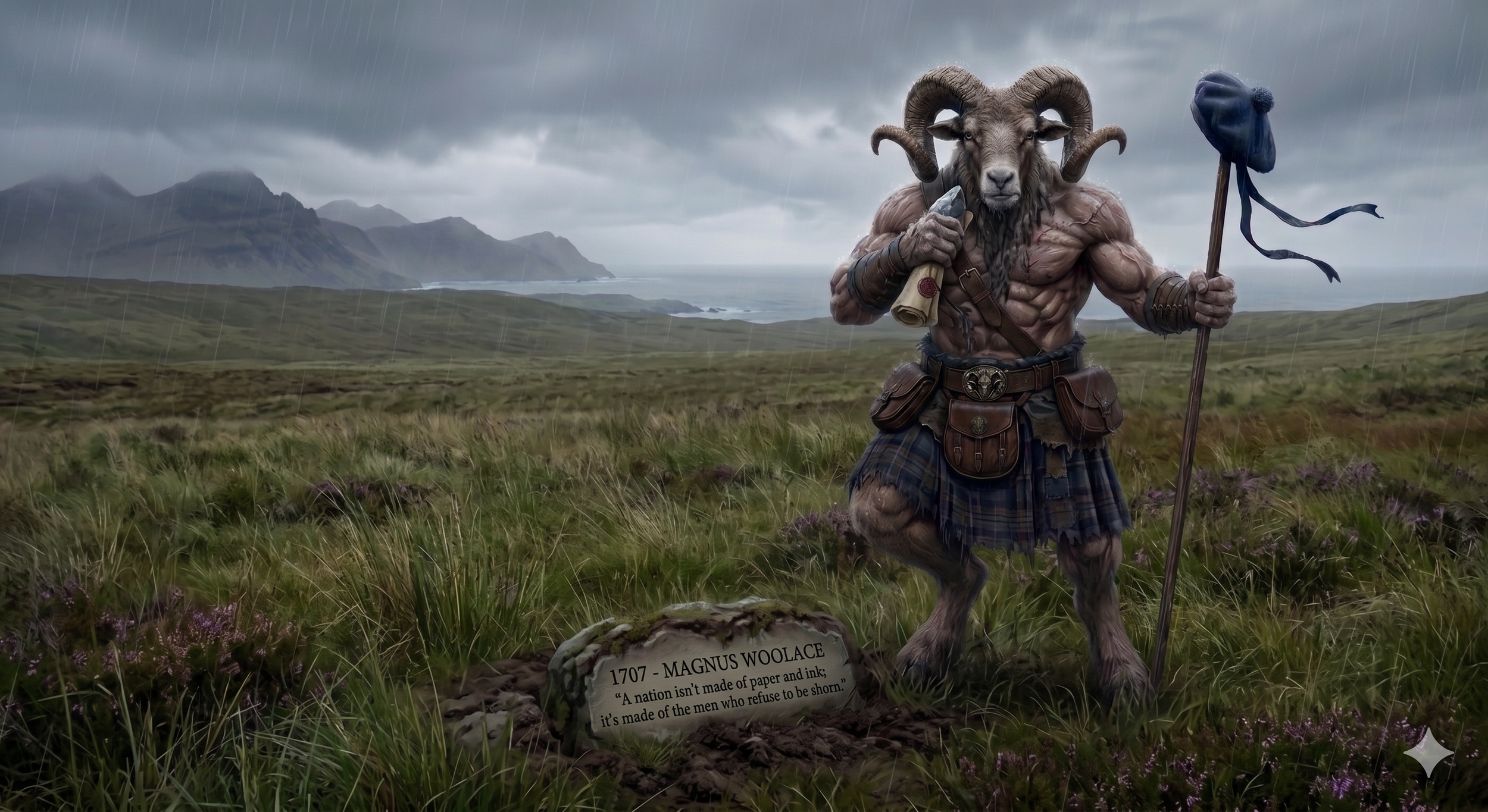
Magnus didn't turn around. His massive, muscled frame—built from a lifetime of hauling wool sacks over mountain passes—looked like it was carved from the very cliff he stood upon. He reached into a leather pouch at his hip, pulled out a raw, frost-bitten turnip, and took a crunch so loud it seemed to stop the rain for a heartbeat.
"Empire," Magnus rumbled, his voice a low vibration that felt like a distant rockslide. "You talk of silver and maps, little man. You say the Parliament is gone, and the crown is one. But look out there." He gestured with the half-eaten turnip toward the horizon, where the blue-grey Scottish hills rose like ancient teeth against the storm.
"Do those hills look like they've read your ledger?" Magnus turned, his eyes cold and steady. "The wind doesn't blow for a King, and the sea doesn't break for a Parliament. You can buy the men in the high chairs, but you can’t buy the man who makes his own way on the rock."
The Auditor sputtered, holding out a quill. "It is the law! To refuse is to be an outlaw in your own land!"
Magnus stepped closer to the edge, the salt spray matting his dark, gritty fleece. He took the Charter from the official's trembling hand, looked at the ink and the royal seal, and then wrapped it slowly around a heavy piece of flint.
"I trade in wool, sweat, and the right to stand where I please," Magnus said. "If your King wants my signature, he can go down there and fish it out of the kelp."
With a flick of his powerful wrist, he hurled the stone-weighted decree into the white foam of the inlet below. He then hoisted his Indigo Blue bonnet high on a shepherd’s pike, letting it snap in the gale like a flag of a country that refused to die.
The Word of Magnus (1707)
"A nation isn't made of paper and ink; it's made of the men who refuse to be shorn for another man's profit. The crown may change its shape, but the mountain remains the same."
Magnus Woolace: The Final Ledger (1707)
The year 1707 felt like a funeral shroud draped over the Highlands. In the halls of Edinburgh, the "parcel of rogues" had signed the Acts of Union, dissolving the Scottish Parliament and merging the fates of two nations. To grease the gears of the deal, the English sent the "Equivalent"—a massive chest of silver meant to pay off Scotland's debts and buy the silence of its leaders.
But the "pigs" in the new imperial bureaucracy made a mistake: they thought every man had a price.
A Royal Auditor, draped in a heavy velvet coat that was rapidly soaking through in the northern gale, tracked Magnus "The Unbroken" Woolace to the jagged cliffs of the Far North. Magnus stood on a precipice overlooking a churning sea inlet, where the grey Atlantic smashed against the granite with the force of an invading army.
"Magnus Woolace!" the Auditor shouted over the wind, clutching a heavy leather-bound ledger. "By the grace of the new Great Britain, I bring your share of the Equivalent! Sign this Imperial Trade Charter, register your 'Border White' under the London monopoly, and this silver is yours. No more smuggling, no more hiding in the mist. You are a citizen of an Empire now!"
Magnus didn't turn around. His massive, muscled frame—built from a lifetime of hauling wool sacks over mountain passes—looked like it was carved from the very cliff he stood upon. He reached into a leather pouch at his hip, pulled out a raw, frost-bitten turnip, and took a crunch so loud it seemed to stop the rain for a heartbeat.
"Empire," Magnus rumbled, his voice a low vibration that felt like a distant rockslide. "You talk of silver and maps, little man. You say the Parliament is gone, and the crown is one. But look out there." He gestured with the half-eaten turnip toward the horizon, where the blue-grey Scottish hills rose like ancient teeth against the storm.
"Do those hills look like they've read your ledger?" Magnus turned, his eyes cold and steady. "The wind doesn't blow for a King, and the sea doesn't break for a Parliament. You can buy the men in the high chairs, but you can’t buy the man who makes his own way on the rock."
The Auditor sputtered, holding out a quill. "It is the law! To refuse is to be an outlaw in your own land!"
Magnus stepped closer to the edge, the salt spray matting his dark, gritty fleece. He took the Charter from the official's trembling hand, looked at the ink and the royal seal, and then wrapped it slowly around a heavy piece of flint.
"I trade in wool, sweat, and the right to stand where I please," Magnus said. "If your King wants my signature, he can go down there and fish it out of the kelp."
With a flick of his powerful wrist, he hurled the stone-weighted decree into the white foam of the inlet below. He then hoisted his Indigo Blue bonnet high on a shepherd’s pike, letting it snap in the gale like a flag of a country that refused to die.
The Word of Magnus (1707)
"A nation isn't made of paper and ink; it's made of the men who refuse to be shorn for another man's profit. The crown may change its shape, but the mountain remains the same."