
 Image 1 of 1
The fog sat heavy in the glen when the Estate Factor, a man with ink-stained fingers named Malcom Thorne, arrived with a detachment of redcoats. They didn't come to arrest McDonell for rebellion; they came to serve him a Summons of Removal.
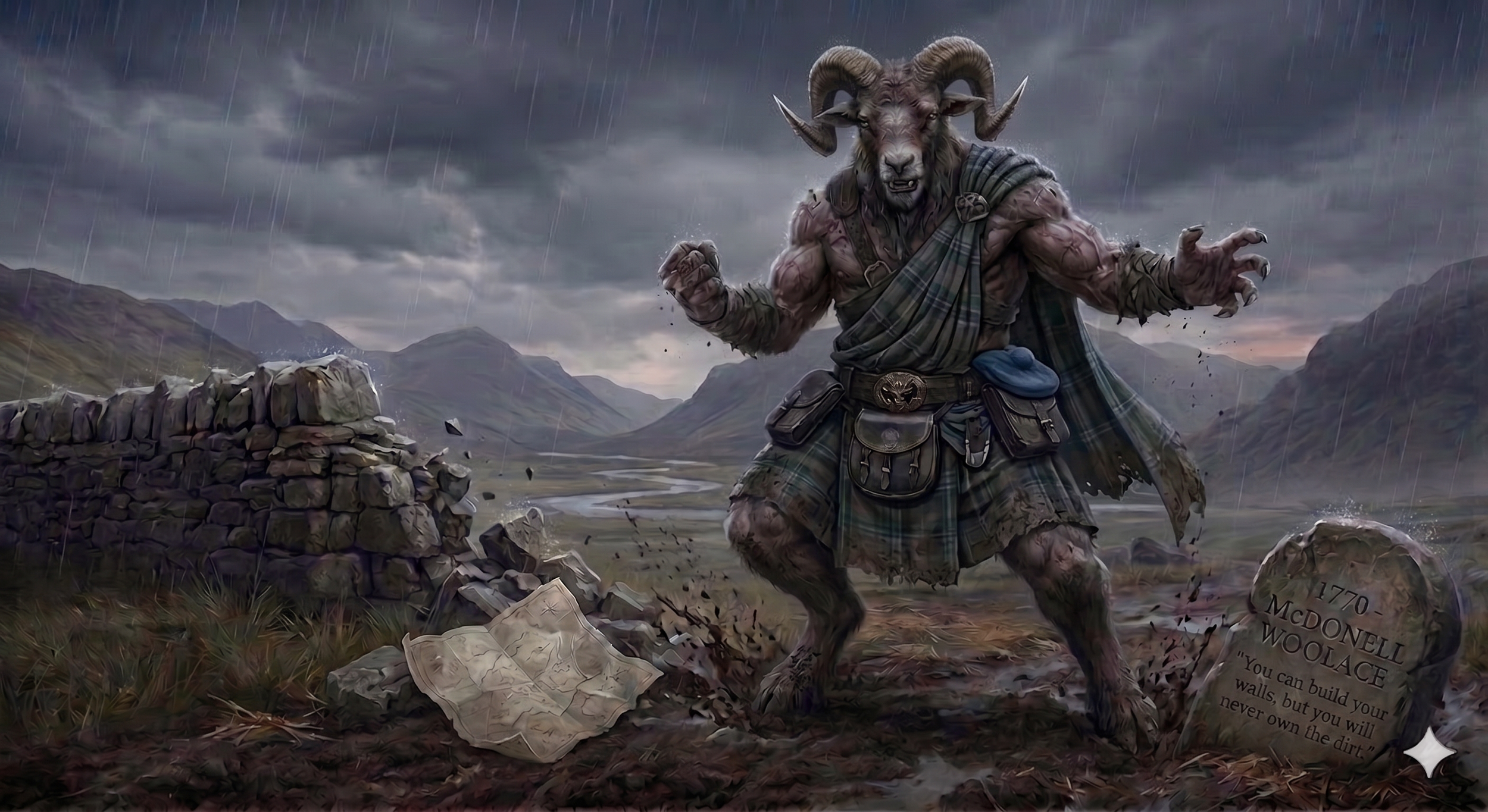
McDonell stood before his stone barn—the same barn where his father Angus had once torn the "civilized" trousers. McDonell was a mountain of a ram, his fleece silvered by the Highland mist, and his horns—once great spirals—were now short, sharp, and chipped from years of head-butting the very boulders of the mountain to clear the soil.
The Paper War: "McDonell Woolace," Thorne announced, holding a parchment heavy with wax seals. "This land is no longer yours to graze. It has been leased to the Southern wool syndicates. You and your kin are to move to the coast of Sutherland by the month's end. You will be given a patch of sand to harvest kelp. The hills belong to the Cheviot sheep now."
McDonell didn't roar. He stepped forward, his hooves sinking deep into the peat. He was draped in an immense MacDonell great kilt, the tartan so thick and heavy it looked like the earth itself had been woven into fabric. He had wrapped it over his shoulder and bound it tight, a visible middle finger to the laws that tried to dilute his heritage.
The Crushing of the Cornerstone: "Kelp?" McDonell’s voice was like the grinding of millstones. "You take a man of the high peaks and tell him to crawl in the salt? You take the wool of my fathers and give it to a stranger’s flock?"
He reached down and gripped the corner of a stone wall—a wall he had built with his own hands to keep the wind from his family. With a slow, terrifying flex of his forearm, he crushed the granite into jagged shards and dust.
"You can burn the roof," McDonell growled, letting the dust fall onto the Factor's polished boots. "You can drive the cattle into the sea. But you will never own the dirt. We aren't moving because you ordered it. We are moving because the mountain itself refuses to feed your greed."
The Hidden Exodus: That night, McDonell didn't lead his people to the coast. Instead of the ships waiting at the harbor, he led the families of the glen upward—into the Hidden Passages of the high ridges where no redcoat dared to climb and no factor could map. He became the "Shepherd of the Mist," keeping the Gaelic tongue and the MacDonell tartan alive in the high caves while the valley below turned white with the "Great Sheep" of the Crown.
"They think the glen is the land. The glen is just the bowl. We are the mountain, and the mountain goes where we go. They can have the grass; we will keep the soul."
The fog sat heavy in the glen when the Estate Factor, a man with ink-stained fingers named Malcom Thorne, arrived with a detachment of redcoats. They didn't come to arrest McDonell for rebellion; they came to serve him a Summons of Removal.
McDonell stood before his stone barn—the same barn where his father Angus had once torn the "civilized" trousers. McDonell was a mountain of a ram, his fleece silvered by the Highland mist, and his horns—once great spirals—were now short, sharp, and chipped from years of head-butting the very boulders of the mountain to clear the soil.
The Paper War: "McDonell Woolace," Thorne announced, holding a parchment heavy with wax seals. "This land is no longer yours to graze. It has been leased to the Southern wool syndicates. You and your kin are to move to the coast of Sutherland by the month's end. You will be given a patch of sand to harvest kelp. The hills belong to the Cheviot sheep now."
McDonell didn't roar. He stepped forward, his hooves sinking deep into the peat. He was draped in an immense MacDonell great kilt, the tartan so thick and heavy it looked like the earth itself had been woven into fabric. He had wrapped it over his shoulder and bound it tight, a visible middle finger to the laws that tried to dilute his heritage.
The Crushing of the Cornerstone: "Kelp?" McDonell’s voice was like the grinding of millstones. "You take a man of the high peaks and tell him to crawl in the salt? You take the wool of my fathers and give it to a stranger’s flock?"
He reached down and gripped the corner of a stone wall—a wall he had built with his own hands to keep the wind from his family. With a slow, terrifying flex of his forearm, he crushed the granite into jagged shards and dust.
"You can burn the roof," McDonell growled, letting the dust fall onto the Factor's polished boots. "You can drive the cattle into the sea. But you will never own the dirt. We aren't moving because you ordered it. We are moving because the mountain itself refuses to feed your greed."
The Hidden Exodus: That night, McDonell didn't lead his people to the coast. Instead of the ships waiting at the harbor, he led the families of the glen upward—into the Hidden Passages of the high ridges where no redcoat dared to climb and no factor could map. He became the "Shepherd of the Mist," keeping the Gaelic tongue and the MacDonell tartan alive in the high caves while the valley below turned white with the "Great Sheep" of the Crown.
"They think the glen is the land. The glen is just the bowl. We are the mountain, and the mountain goes where we go. They can have the grass; we will keep the soul."