
 Image 1 of 1
Lyon watched as the factor’s men moved through the valley like a slow-moving wildfire. They weren't just taking the land; they were erasing the soul of it.
The Burning of the Glen
The smoke from the MacAulay croft rose straight and black into the cold Highland sky, a jagged tear in the mist.
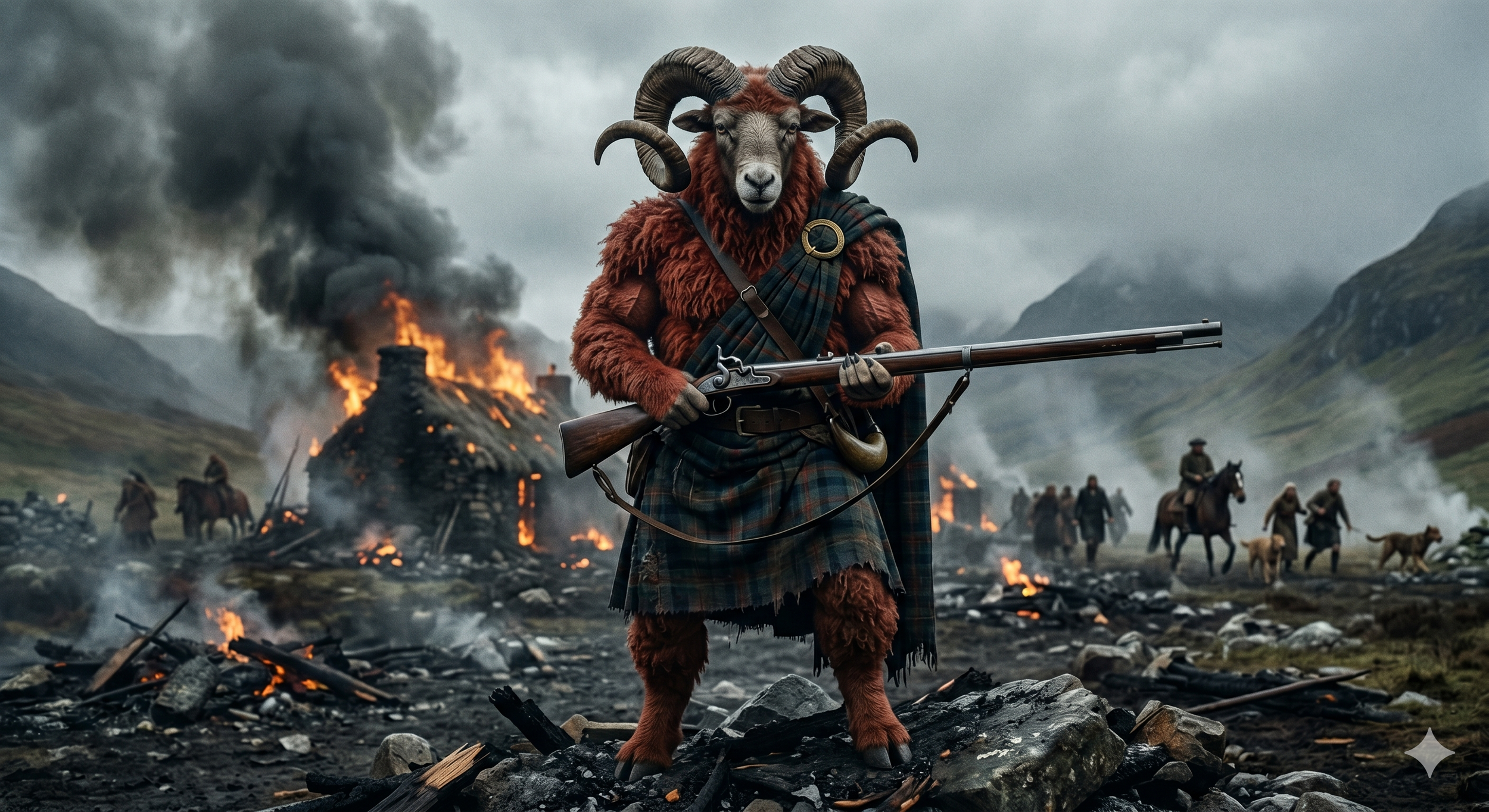
Lyon stood on the ridgeline, overlooking the valley. He was a colossus of muscle and bone—a titan standing well over seven feet tall, his chest as broad and unyielding as a blacksmith's anvil. His fleece was the colour of peat-smoke, thick and matted with wild heather, and his massive, scarred horns curved around his skull like a weathered iron crown.
Below him, the tragedy of 1780 was unfolding in real-time. The factor’s men moved through the glen like a slow-moving wildfire, torching ancestral homes to clear the land for the landlord's profitable new flocks. The displaced clansmen were being herded toward the coast like common cattle.
Around Lyon, the ordinary sheep of the valley bleated in blind terror, scattering aimlessly or lowering their heads to grass, seeking comfort in the earth.
But Lyon did not graze.
He stood perfectly still, a towering statue of muscle, simply watching. His amber eyes, burning with the ancient, rolling echoes of his ancestors, tracked every spark, every scream, and every drop of dignity stripped from his people. He did not bow his head. He did not look away. The geological weight of the old mountains seemed to settle into his spine as his fists clenched into hard, powerful hooves.
The beast was gone. The king had awakened.
Breaking his watchful silence, Lyon strode down the ridge, his massive frame cutting through the mist. He walked straight into the smoking, skeletal ruins of the MacAulay blackhouse. With a grunt of pure defiance, he kicked aside a burning, two-hundred-pound oak rafter as if it were a twig.
Beneath it, hidden in a floor-niche, lay a Long Land Pattern Brown Bess musket and a faded feileadh-mor (great kilt). He slipped into the heavy wool cloth, the brass brooch straining against his massive, muscular chest, and slung the heavy powder horn over his shoulder.
"Look at that big red brute," a voice laughed from the smoke. It was one of the factor’s thugs, a man with a face like curdled milk, cracking a leather whip. "He'll make a fine rug for the Duke's study."
Lyon didn't run. He simply stepped out of the ash, a towering, muscular wall of fur and steel, leveling the long barrel of the musket with a steady, terrifying gaze.
"The only thing being laid out today," Lyon growled, his voice like tectonic plates grinding together, "is the law."
The hammer clicked back. The revolution had begun.
Lyon watched as the factor’s men moved through the valley like a slow-moving wildfire. They weren't just taking the land; they were erasing the soul of it.
The Burning of the Glen
The smoke from the MacAulay croft rose straight and black into the cold Highland sky, a jagged tear in the mist.
Lyon stood on the ridgeline, overlooking the valley. He was a colossus of muscle and bone—a titan standing well over seven feet tall, his chest as broad and unyielding as a blacksmith's anvil. His fleece was the colour of peat-smoke, thick and matted with wild heather, and his massive, scarred horns curved around his skull like a weathered iron crown.
Below him, the tragedy of 1780 was unfolding in real-time. The factor’s men moved through the glen like a slow-moving wildfire, torching ancestral homes to clear the land for the landlord's profitable new flocks. The displaced clansmen were being herded toward the coast like common cattle.
Around Lyon, the ordinary sheep of the valley bleated in blind terror, scattering aimlessly or lowering their heads to grass, seeking comfort in the earth.
But Lyon did not graze.
He stood perfectly still, a towering statue of muscle, simply watching. His amber eyes, burning with the ancient, rolling echoes of his ancestors, tracked every spark, every scream, and every drop of dignity stripped from his people. He did not bow his head. He did not look away. The geological weight of the old mountains seemed to settle into his spine as his fists clenched into hard, powerful hooves.
The beast was gone. The king had awakened.
Breaking his watchful silence, Lyon strode down the ridge, his massive frame cutting through the mist. He walked straight into the smoking, skeletal ruins of the MacAulay blackhouse. With a grunt of pure defiance, he kicked aside a burning, two-hundred-pound oak rafter as if it were a twig.
Beneath it, hidden in a floor-niche, lay a Long Land Pattern Brown Bess musket and a faded feileadh-mor (great kilt). He slipped into the heavy wool cloth, the brass brooch straining against his massive, muscular chest, and slung the heavy powder horn over his shoulder.
"Look at that big red brute," a voice laughed from the smoke. It was one of the factor’s thugs, a man with a face like curdled milk, cracking a leather whip. "He'll make a fine rug for the Duke's study."
Lyon didn't run. He simply stepped out of the ash, a towering, muscular wall of fur and steel, leveling the long barrel of the musket with a steady, terrifying gaze.
"The only thing being laid out today," Lyon growled, his voice like tectonic plates grinding together, "is the law."
The hammer clicked back. The revolution had begun.