
 Image 1 of 1
The Munroe Woolace 1775 (coming soon)
Munroe Woolace: The Lexington Diversion (April 19, 1775)
It was the morning of April 19, 1775, and Lexington Green was choked in a cold, heavy fog. The alarm riders—Paul Revere and William Dawes—had long passed, but the tension remained. Captain John Parker's eighty minutemen were gathered, waiting.
The Arrival of the RAM
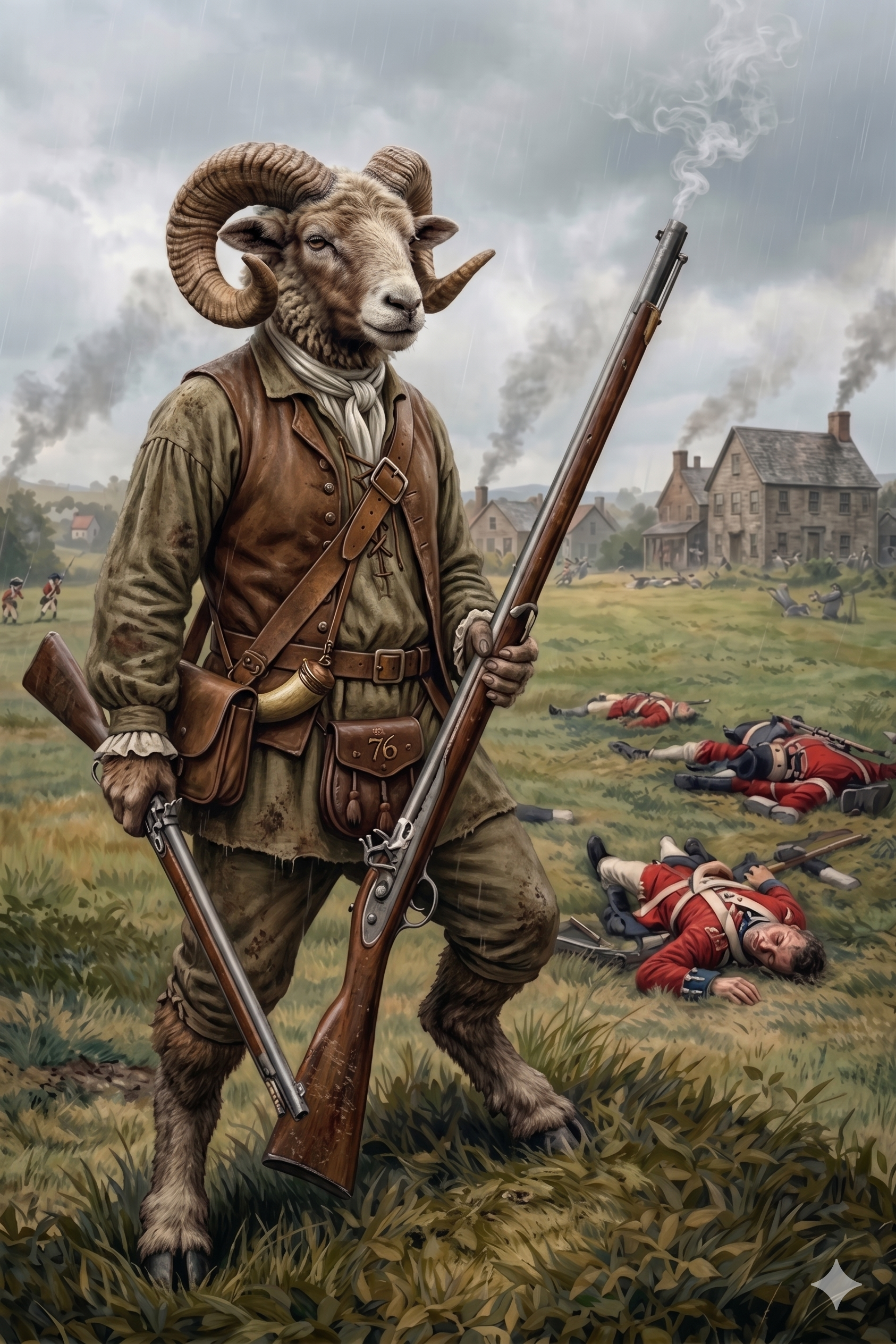
Munroe Woolace arrived not on horseback, but on his own two powerful feet, moving silently through the mist. To the inner circle of the rebellion, he was known as a RAM—a brother of the clandestine order of Righteous Ancient Men. To the common soldier, the title fit his sheer presence. He was a titanic ram of a man, broad-shouldered and imposing.
His "fleece" was a heavy, reddish-brown wool duster, and his "horns" were represented by his specialized gear: an asymmetrical, iron-reinforced leather cap and a pair of heavily carved powder horns slung across his chest. One horn was a jagged, powerful spiral; the other was short and chipped from past, undocumented conflicts against colonial injustice.
Beneath his duster, he wore a practical New England canvas hunting shirt. Tucked securely into his Gaelic blue-patch leather tool belt was a single, Indigo Blue woolen ribbon. He was not on the Green to stand in a conventional firing line, but to execute a precise, Silent Redirection.
The Call of "Improvement"
The Redcoats were marching on Concord to seize colonial powder and arrest the leaders of the rebellion. The Order of the Righteous Ancient Men had always seen "improvement" as an imperial euphemism for greed and forced removal—the same cold bureaucracy Munroe's family had fought hand-to-hand in 1770.
Using his intimate knowledge of the Lexington fields, Munroe had spent the pre-dawn hours directing local livestock, medicine, and gunpowder away from the Green. For his final act, he slipped into an ambush position behind a moss-covered stone wall, unslinging a heavy, long-barreled Pennsylvania rifle. His target was a clumsy British baggage wagon currently struggling through a bottleneck in the road.
The Ambush from the Mist
As the British column approached the Green and Major John Pitcairn shouted the order for the colonists to disperse, chaos loomed. But before the historic "shot heard 'round the world" could be fired from the common line, Munroe initiated his own diversion from the shadows.
Resting his heavy rifle on the stone wall, the RAM aligned his sights. He wasn't aiming at the soldiers; he was targeting the stressed, wooden axletree of the advance baggage cart, right where a critical linchpin held it together.
With a deafening CRACK! that shattered the morning silence, Munroe fired.
The heavy lead ball tore through the fog and struck the wooden axle with pinpoint precision. Already under pressure from the bottleneck, the timber splintered and snapped instantly. The heavy cart violently tipped, spilling kettles, muskets, and official estate papers into the mud.
The sudden explosion of the rifle shot and the crash of the collapsing wagon threw the British advance into immediate confusion. Those critical, chaotic seconds disrupted the Redcoat timeline, buying the final window needed to complete the vital redirection of colonial supplies.
The Word of Munroe (1775)
"They come to improve our fields and count our powder. They forget that the terrain is not on their map, and our strength is not in their ledgers."
Munroe Woolace: The Lexington Diversion (April 19, 1775)
It was the morning of April 19, 1775, and Lexington Green was choked in a cold, heavy fog. The alarm riders—Paul Revere and William Dawes—had long passed, but the tension remained. Captain John Parker's eighty minutemen were gathered, waiting.
The Arrival of the RAM
Munroe Woolace arrived not on horseback, but on his own two powerful feet, moving silently through the mist. To the inner circle of the rebellion, he was known as a RAM—a brother of the clandestine order of Righteous Ancient Men. To the common soldier, the title fit his sheer presence. He was a titanic ram of a man, broad-shouldered and imposing.
His "fleece" was a heavy, reddish-brown wool duster, and his "horns" were represented by his specialized gear: an asymmetrical, iron-reinforced leather cap and a pair of heavily carved powder horns slung across his chest. One horn was a jagged, powerful spiral; the other was short and chipped from past, undocumented conflicts against colonial injustice.
Beneath his duster, he wore a practical New England canvas hunting shirt. Tucked securely into his Gaelic blue-patch leather tool belt was a single, Indigo Blue woolen ribbon. He was not on the Green to stand in a conventional firing line, but to execute a precise, Silent Redirection.
The Call of "Improvement"
The Redcoats were marching on Concord to seize colonial powder and arrest the leaders of the rebellion. The Order of the Righteous Ancient Men had always seen "improvement" as an imperial euphemism for greed and forced removal—the same cold bureaucracy Munroe's family had fought hand-to-hand in 1770.
Using his intimate knowledge of the Lexington fields, Munroe had spent the pre-dawn hours directing local livestock, medicine, and gunpowder away from the Green. For his final act, he slipped into an ambush position behind a moss-covered stone wall, unslinging a heavy, long-barreled Pennsylvania rifle. His target was a clumsy British baggage wagon currently struggling through a bottleneck in the road.
The Ambush from the Mist
As the British column approached the Green and Major John Pitcairn shouted the order for the colonists to disperse, chaos loomed. But before the historic "shot heard 'round the world" could be fired from the common line, Munroe initiated his own diversion from the shadows.
Resting his heavy rifle on the stone wall, the RAM aligned his sights. He wasn't aiming at the soldiers; he was targeting the stressed, wooden axletree of the advance baggage cart, right where a critical linchpin held it together.
With a deafening CRACK! that shattered the morning silence, Munroe fired.
The heavy lead ball tore through the fog and struck the wooden axle with pinpoint precision. Already under pressure from the bottleneck, the timber splintered and snapped instantly. The heavy cart violently tipped, spilling kettles, muskets, and official estate papers into the mud.
The sudden explosion of the rifle shot and the crash of the collapsing wagon threw the British advance into immediate confusion. Those critical, chaotic seconds disrupted the Redcoat timeline, buying the final window needed to complete the vital redirection of colonial supplies.
The Word of Munroe (1775)
"They come to improve our fields and count our powder. They forget that the terrain is not on their map, and our strength is not in their ledgers."