
 Image 1 of 2
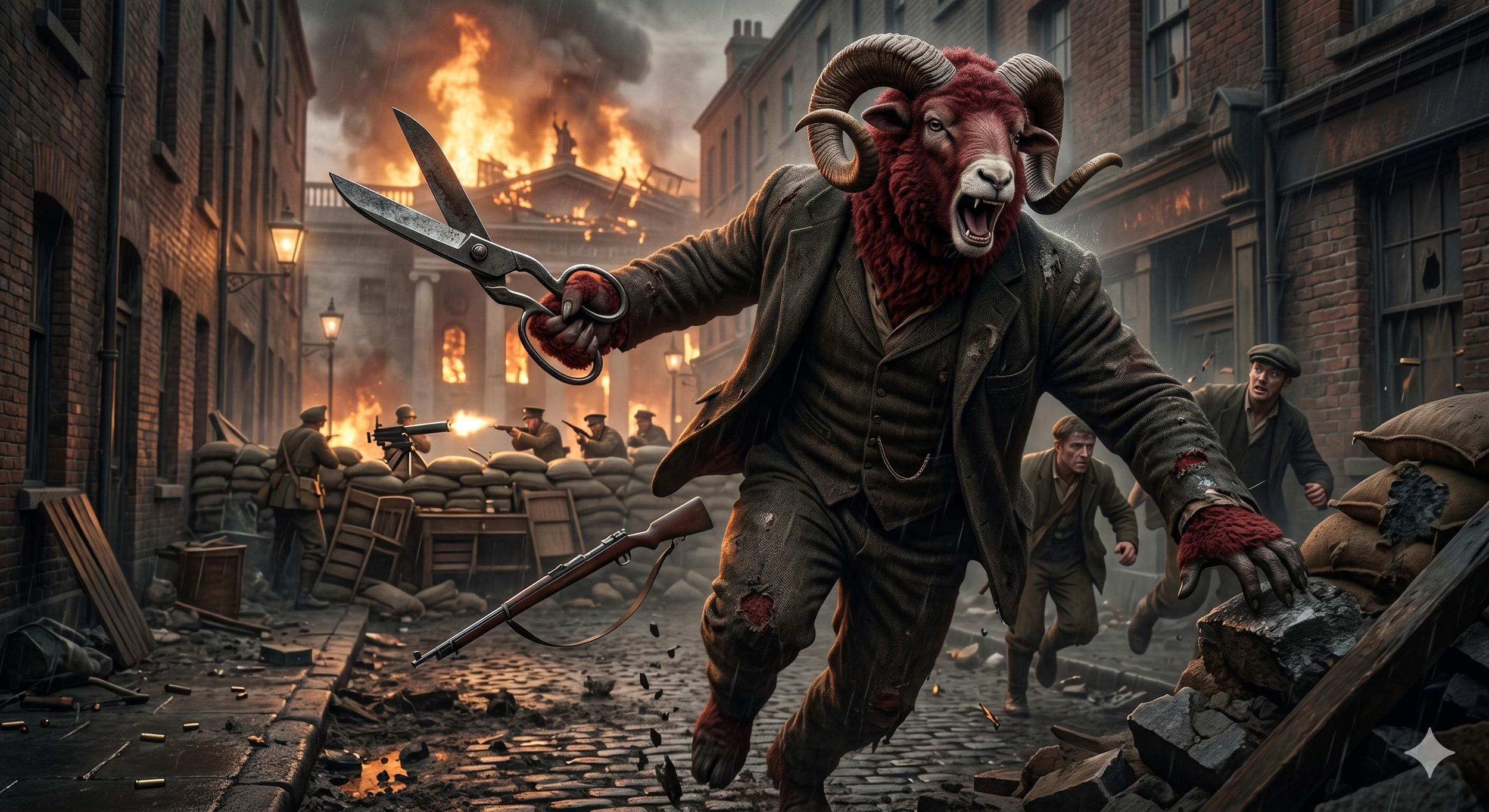 Image 2 of 2
By 1916, the Woolace family had settled in the industrial heart of Scotland. Carrigan Woolace, a direct descendant of the early rebels, lived in Denny, Stirlingshire. While his ancestors were known for uprooting stones and breaking chains, Carrigan was a man of the cloth—specifically, a master tailor. But beneath the fine wool of the suits he stitched, the "red fire" of the Woolace bloodline still burned.
Carrigan was an intellectual force, a ram who mastered Latin, French, and the ancient Irish tongue to reconnect his flock with their stolen heritage.
On Easter Monday, 1916, Carrigan Woolace marched into the General Post Office (GPO) in Dublin. As the "white tide" of British bureaucracy rained artillery shells down on the city, the GPO became a furnace. Carrigan didn't just fight with a rifle; he used his massive frame to shift heavy mail sacks and furniture to barricade the doors, turning the post office into a fortress of wool and iron.
The Charge on the Birthday By Friday, April 28, the GPO was a collapsing inferno. It was Carrigan’s 34th birthday. Under the command of The O’Rahilly, a small group of volunteers prepared a desperate charge up Moore Street to break through a British machine-gun barricade.
Carrigan didn't hesitate. He dropped his rifle and drew his heavy silver shears, bleating a war cry that drowned out the whistle of the bullets. He became a living shield for his comrades, his thick red fleece absorbing the initial volleys as he charged toward the barricade.
"You've tried to stitch our mouths shut for centuries!" Carrigan’s voice echoed against the brick walls of Moore Street. "But today, the Woolace line cuts the thread! You can burn the GPO, but you can't burn the spirit of a free flock!"
He fell in the mud of Moore Street, shot down on the very day he was born. He died as he lived: a tailor of freedom, stitching a new map of Ireland with his own blood.
"A suit of clothes can be unraveled, and a building can be turned to ash. But a nation is a fabric woven from the souls of those who refuse to be shorn. Today is my birthday, and I choose to give it to the future!"
By 1916, the Woolace family had settled in the industrial heart of Scotland. Carrigan Woolace, a direct descendant of the early rebels, lived in Denny, Stirlingshire. While his ancestors were known for uprooting stones and breaking chains, Carrigan was a man of the cloth—specifically, a master tailor. But beneath the fine wool of the suits he stitched, the "red fire" of the Woolace bloodline still burned.
Carrigan was an intellectual force, a ram who mastered Latin, French, and the ancient Irish tongue to reconnect his flock with their stolen heritage.
On Easter Monday, 1916, Carrigan Woolace marched into the General Post Office (GPO) in Dublin. As the "white tide" of British bureaucracy rained artillery shells down on the city, the GPO became a furnace. Carrigan didn't just fight with a rifle; he used his massive frame to shift heavy mail sacks and furniture to barricade the doors, turning the post office into a fortress of wool and iron.
The Charge on the Birthday By Friday, April 28, the GPO was a collapsing inferno. It was Carrigan’s 34th birthday. Under the command of The O’Rahilly, a small group of volunteers prepared a desperate charge up Moore Street to break through a British machine-gun barricade.
Carrigan didn't hesitate. He dropped his rifle and drew his heavy silver shears, bleating a war cry that drowned out the whistle of the bullets. He became a living shield for his comrades, his thick red fleece absorbing the initial volleys as he charged toward the barricade.
"You've tried to stitch our mouths shut for centuries!" Carrigan’s voice echoed against the brick walls of Moore Street. "But today, the Woolace line cuts the thread! You can burn the GPO, but you can't burn the spirit of a free flock!"
He fell in the mud of Moore Street, shot down on the very day he was born. He died as he lived: a tailor of freedom, stitching a new map of Ireland with his own blood.
"A suit of clothes can be unraveled, and a building can be turned to ash. But a nation is a fabric woven from the souls of those who refuse to be shorn. Today is my birthday, and I choose to give it to the future!"