
 Image 1 of 1
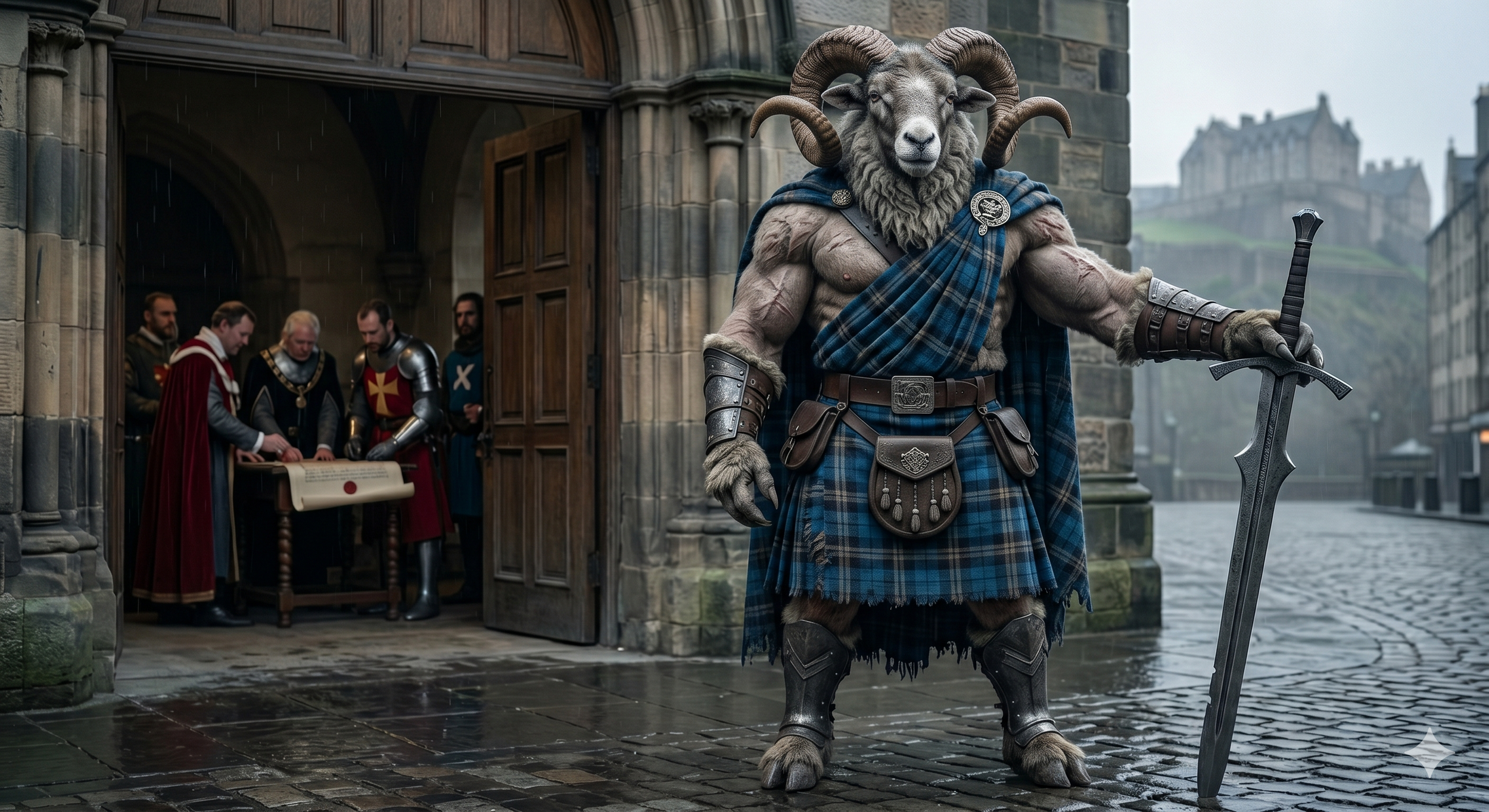
As the spring of 1328 brought the long-awaited recognition of Scottish independence, Roderick Woolace stood outside the council chambers in Edinburgh, his presence as solid as the castle rock itself. After decades of bloody conflict, the English were finally ready to sign the Treaty of Edinburgh-Northampton, acknowledging Robert the Bruce as the rightful King of Scots. While others celebrated with nervous laughter, Roderick remained completely unshaken, his hand resting on the pommel of his sword. He knew the English had spent years trying to fleece Scotland of its dignity, but he was there to ensure that even at the peace table, no one tried to pull the wool over the eyes of the Scottish people.
Roderick was a man who preferred a sharp blade to a smooth tongue, and his rebellious spirit was a constant reminder to the English envoys that Scotland was no longer a flock to be led. As the seals were pressed into the parchment, he watched with a cool, piercing gaze that made the negotiators feel more than a little sheepish. He knew the ram-ifications of this moment would define the nation for centuries. To Roderick, this wasn't just a piece of paper; it was the final shearing of the bureaucratic pigs. He stood as a sturdy anchor of a free nation, proving that the Scottish spirit was far too spunky to be knitted into a foreign tapestry.
"The war is over, the treaty is signed, and Roderick is still looking for a fight."
As the spring of 1328 brought the long-awaited recognition of Scottish independence, Roderick Woolace stood outside the council chambers in Edinburgh, his presence as solid as the castle rock itself. After decades of bloody conflict, the English were finally ready to sign the Treaty of Edinburgh-Northampton, acknowledging Robert the Bruce as the rightful King of Scots. While others celebrated with nervous laughter, Roderick remained completely unshaken, his hand resting on the pommel of his sword. He knew the English had spent years trying to fleece Scotland of its dignity, but he was there to ensure that even at the peace table, no one tried to pull the wool over the eyes of the Scottish people.
Roderick was a man who preferred a sharp blade to a smooth tongue, and his rebellious spirit was a constant reminder to the English envoys that Scotland was no longer a flock to be led. As the seals were pressed into the parchment, he watched with a cool, piercing gaze that made the negotiators feel more than a little sheepish. He knew the ram-ifications of this moment would define the nation for centuries. To Roderick, this wasn't just a piece of paper; it was the final shearing of the bureaucratic pigs. He stood as a sturdy anchor of a free nation, proving that the Scottish spirit was far too spunky to be knitted into a foreign tapestry.
"The war is over, the treaty is signed, and Roderick is still looking for a fight."